

Fatigue is often described as a lack of energy; but for millions of people living with chronic fatigue conditions, the problem runs far deeper. In disorders like myalgic encephalomyelitis/chronic fatigue syndrome (ME/CFS), even modest physical or mental exertion can lead to a delayed and sometimes severe worsening of symptoms. This phenomenon, known as post-exertional malaise (PEM), suggests that fatigue is not simply about effort or motivation, but about how the body recovers after stress.
Emerging research points to a critical biological process at the center of this breakdown: autophagy. Understanding the relationship between autophagy and chronic fatigue is helping scientists reframe fatigue as a cellular recovery problem — not a personal failure.
Why Chronic Fatigue Is Different From Ordinary Tiredness
Most people are familiar with everyday fatigue. You work hard, you feel tired, you rest — and energy returns. Chronic fatigue behaves differently. In conditions like ME/CFS, exertion often triggers symptoms that worsen hours or even days later, including deep exhaustion, cognitive fog, pain, and flu-like sensations.
This delayed crash is what distinguishes PEM from ordinary tiredness. Instead of restoring energy, activity appears to overwhelm the body’s ability to recover, pointing to a deeper biological disruption.
How Healthy Cells Recover After Stress
At the cellular level, recovery depends on a process called autophagy, as noted above. Autophagy is the body’s internal recycling and repair system. When cells experience stress — from exercise, infection, or mental effort — they accumulate damage. Autophagy clears out worn-out components, recycles usable materials, and helps restore cellular balance. The word autophagy literally means to eat oneself, in this case, cells digesting themselves when they become inefficient.
In healthy systems, autophagy allows cell populations to reset after stress so energy production can resume efficiently. It is essential for muscle recovery, immune regulation, and mitochondrial health. Without it, cells struggle to function — especially under repeated demands. It is a self-renewal process, just like trees shedding their leaves in winter and growing a new set in the spring.
What Happens When Autophagy Is Blocked
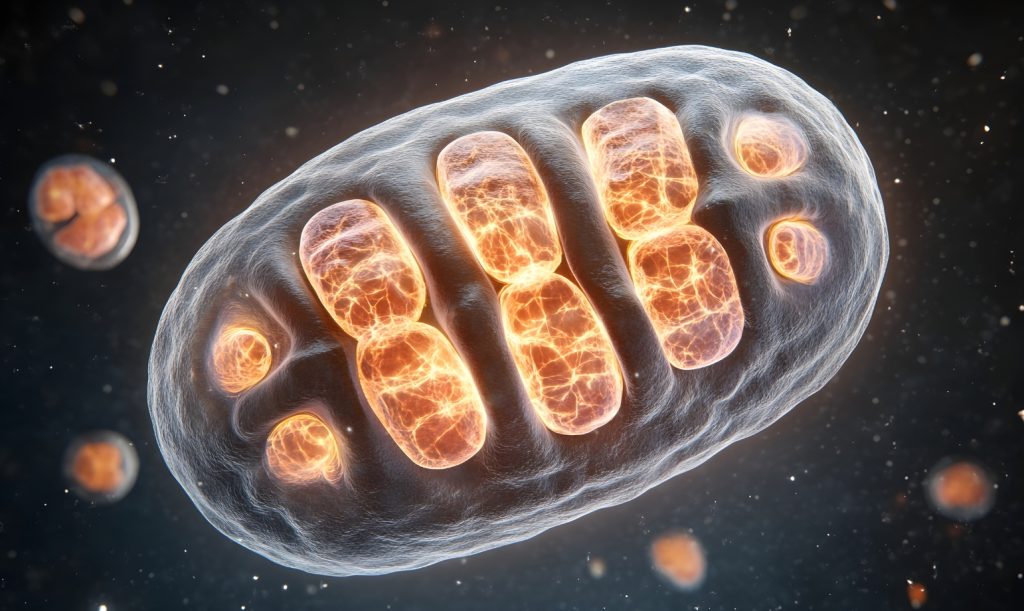
When autophagy is impaired, damaged proteins and dysfunctional cellular components accumulate instead of being cleared. Over time, this buildup disrupts energy production and prolongs inflammatory signaling. The result is not just fatigue, but poor recovery. It is similar to a self-cleaning appliance that cannot run its cleaning cycle.
This helps explain why people with chronic fatigue conditions often feel relatively stable at rest but deteriorate after exertion. The stress of activity increases cellular damage, yet the system responsible for cleanup and repair fails to respond adequately.
The Role of mTOR: When the Body Stays Stuck in “Go Mode”
A key regulator of autophagy is a signaling pathway called mTOR (mechanistic target of rapamycin). mTOR acts as a cellular decision-maker, telling cells when to grow, build proteins, and respond to stress. When mTOR is active, autophagy is suppressed. When mTOR quiets down, autophagy can begin.
This balance is essential. Cells cannot deeply repair themselves while being told to keep pushing forward.
In chronic fatigue states, it is likely that mTOR remains chronically overactive, keeping cells locked in a low-grade “go mode.” Even when rest is needed, the signal to shift into repair never fully arrives — and autophagy remains impaired.
What a Recent Study Reveals About Autophagy and Chronic Fatigue
A 2025 pilot study published in the Journal of Translational Medicine explored this exact mechanism in people with ME/CFS. Researchers examined whether suppressing mTOR activity could restore autophagy and improve fatigue-related symptoms.
Rather than focusing only on symptom questionnaires, the study measured two blood-based markers tied directly to autophagy:
- BECLIN-1, a protein involved in initiating healthy autophagy
- pSer258-ATG13, a modified protein that signals autophagy is being blocked by mTOR activity
The researchers observed that participants who showed fatigue symptom improvement also demonstrated increased BECLIN-1 levels and reduced pSer258-ATG13, suggesting a biological shift toward improved cellular cleanup.
As the authors noted, “Sustained mTOR activation may cause chronic muscle fatigue by inhibiting autophagy.” In other words, when cells remain stuck in growth mode, recovery breaks down. Cautiously concluded, low-dose mTOR inhibition was associated with improvements in fatigue and PEM.

Why This Research Matters
This work represents a meaningful shift in how chronic fatigue is understood at the cellular level. By linking symptoms to measurable cellular processes, it moves the conversation away from vague explanations and toward biological accountability.
Viewing fatigue through the lens of autophagy helps explain why rest alone is often insufficient, why exertion for these individuals can be harmful rather than helpful, and why recovery, not effort, is the central issue. It also opens the door to more precise research, where biomarkers may soon guide more individualized approaches rather than one-size-fits-all recommendations.
What This Research Helps Clarify
This research does not suggest that there is a cure for chronic fatigue, nor does it imply that all fatigue conditions share the same cause. Not everyone will experience the same biological disruptions, and not every intervention will work for every individual. However, it does support the involvement of autophagy and its relationship to mTOR activity in some cases of ME/CFS.
Most importantly, this science is still evolving. These findings are educational, and are useful and contributing to our understanding of healthy vs. impaired cellular pathways and processes.
Supporting Cellular Recovery, Thoughtfully
At ReCELLebrate, we believe longevity and resilience begin at the cellular level. Our approach is grounded in emerging science around cellular repair, metabolic balance, and recovery — not quick fixes or exaggerated promises.
While research into pathways like autophagy is still developing, it reinforces a principle we return to often: supporting the body’s natural renewal and healing processes matters. If you’re curious to explore evidence-informed strategies designed to support cellular health and long-term vitality, we invite you to learn more about ReCELLebrate’s science-forward approach to living beautifully longer.
Rethinking Fatigue as a Recovery Problem
Chronic fatigue is not a failure of willpower, motivation, or character. It is increasingly understood as a failure of recovery and adaptation at the cellular level. By studying processes like autophagy, we are further illuminating why rest doesn’t always restore energy — and why recovery may deserve far more attention than effort.
Understanding the biology behind fatigue doesn’t just advance our actionable knowledge— it restores dignity to lived experience. It affirms what so many have long known: that something deeper was happening beneath the surface. At ReCELLebrate, we believe this kind of science-forward understanding is essential to supporting resilience, renewal, and the ability to live beautifully longer.
References:
- Ruan et al., Journal of Translational Medicine, 2025.
Frequently Asked Questions:
mTOR (mechanistic target of rapamycin) is a signaling pathway that helps cells decide when to grow, build, and respond to stress. When mTOR is active, cells are essentially told that resources are available and it’s time to push forward — producing proteins, increasing activity, and responding to demands.
This system is essential for survival. However, it is designed to turn on and off depending on circumstances. Problems arise when mTOR remains active for too long without adequate periods of rest and repair.
Chronic mTOR overactivation means that cells remain in a prolonged “growth and stress-response” mode, even when recovery should occur. Instead of cycling between activity and repair, the system becomes biased toward constant output.
In the study highlighted in this article, researchers describe sustained mTOR activation as a potential driver of fatigue because it interferes with the body’s ability to initiate cellular repair processes, particularly autophagy.
Autophagy and mTOR are tightly linked. When mTOR is active, it suppresses autophagy. This makes biological sense: cells cannot deeply repair themselves while simultaneously being instructed to grow and expend energy.
The article explains that mTOR directly interferes with key autophagy proteins, preventing the formation of the cellular machinery needed to begin cleanup and recycling. As a result, autophagy is stalled rather than fully activated.
Autophagy is the process by which cells clear damaged components, recycle materials, and reset after stress. It plays a critical role in maintaining healthy mitochondria (more than just the cell’s energy producers), regulating inflammation, and restoring balance after exertion.
When autophagy functions properly, cells recover efficiently. When it is impaired, damage accumulates, energy production falters, and recovery becomes delayed or incomplete.
When autophagy is blocked, cells are unable to clear the damage generated by physical or mental exertion. This leads to:
1. Accumulation of dysfunctional cellular components
2. Prolonged inflammatory signaling
3. Reduced energy availability
In conditions like ME/CFS, this failure of cellular recovery helps explain post-exertional malaise, where symptoms worsen hours or days after activity rather than improving with rest.
The study specifically links impaired autophagy to reduced activity tolerance and prolonged fatigue following exertion.
Rapamycin is a medication known to inhibit mTOR signaling. In this research context, it is not presented as a cure, but as a tool to study whether reducing mTOR activity can restore autophagy. However, its use as an anti-aging tool (called a senolytic), is actively being evaluated.
By gently inhibiting mTOR, autophagy could resume, allowing cells to clear damage and recover more effectively.
High-dose, continuous mTOR inhibition can disrupt essential metabolic functions. In contrast, the study used low-dose, once-weekly rapamycin to reduce excessive mTOR signaling without shutting it down entirely. Slightly nudging the balance appears to have more benefit than completely overwhelming it.
In this study, the dosing approach was generally well tolerated and was associated with improvements in fatigue and post-exertional malaise in a subset of participants, while preserving normal laboratory safety markers.
BECLIN-1 is a protein involved in initiating autophagy. Higher levels of BECLIN-1 are considered a biomarker of improved autophagy activity.
In the referenced study, increased BECLIN-1 levels were observed alongside improvements in fatigue-related symptoms, suggesting that enhanced cellular cleanup may be linked to better recovery and energy regulation.
ATG13 is a protein required to start autophagy. When it is phosphorylated at a specific site (serine 258), it becomes inactive, preventing autophagy from proceeding.
The phosphorylated form (pSer258-ATG13) is therefore considered a marker of blocked autophagy driven by mTOR activity. This study found that reductions in pSer258-ATG13 were associated with improvements in post-exertional malaise, supporting the idea that restoring autophagy may improve recovery after exertion.
– The working hypothesis presented in this research is that:
– Chronic mTOR overactivation suppresses autophagy
– Suppressed autophagy prevents proper cellular recovery
– This leads to energy failure, fatigue, and post-exertional malaise
– Gently reducing mTOR activity may allow autophagy to resume and support symptomatic recovery
There are many potential causes of chronic fatigue that have root causes at the cellular level. One common one is mitochondrial dysfunction. There is a growing experience with the success of utilizing therapeutic peptides to help address mitochondrial structure and function.
If you are suffering from chronic fatigue, Dr. Jeff at ReCELLebrate can be your next call. Discuss all the options for you, including mitochondrial support through peptides, Rapamycin for gentle suppression of mTOR, and other strategic approaches. Contact us at 1-844-4RECELL, or at https://ReCELLebrate.com